Why Does My Circuit Breaker Keep Tripping?
The Troubleshooting decision to make first
A breaker that keeps tripping is responding to a condition it is designed to interrupt. Common possibilities include an overloaded circuit, a fault in an appliance or cord, damaged wiring, a ground fault, an arc-fault event, or a breaker problem. Repeatedly resetting it does not correct the cause and can hide a developing hazard.
What a repeated trip can mean
A standard breaker limits excessive current. GFCI and AFCI breakers can also react to leakage or arcing conditions. That means two trips that look identical at the panel can have very different causes.
Timing is useful evidence. A trip that happens only when several heaters or kitchen appliances run together may point toward load. An immediate trip when one device is connected may involve that device or its circuit. A trip with no obvious pattern still needs testing rather than guessing.
Details to collect without opening the panel
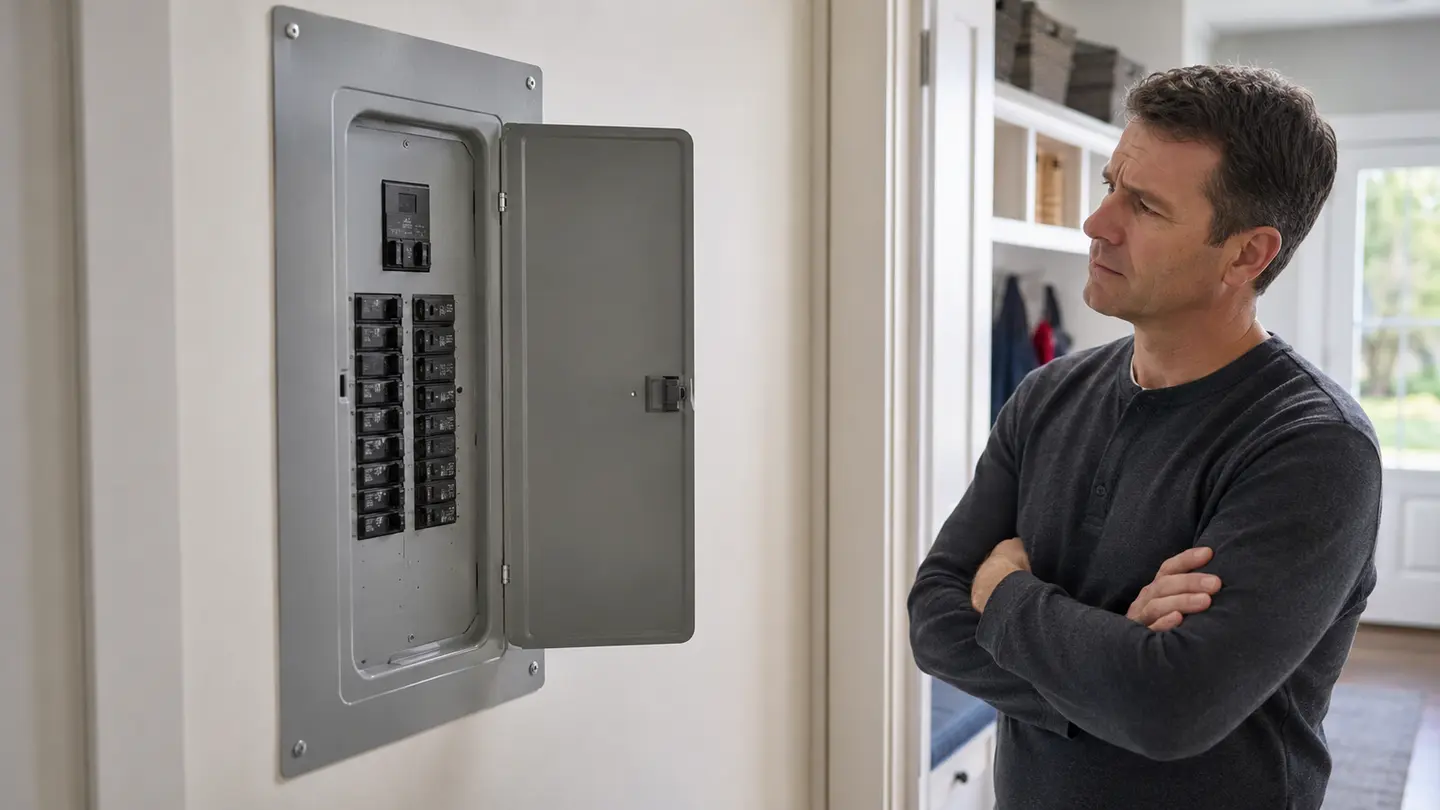
Keep the panel cover in place and note what you can observe from normal controls. Useful information helps an electrician reproduce the condition and narrow the diagnosis.
- Which rooms, receptacles, lights, or appliances lost power
- What was running and whether anything had just been plugged in
- Whether the breaker trips immediately or after several minutes
- Any recent remodel, water leak, storm, new appliance, or damaged cord
- Unusual heat, odor, buzzing, discoloration, or flickering
When to stop and call
Do not keep resetting a breaker that trips again, feels unusually warm, will not stay set, or is associated with burning odor, buzzing, visible damage, or water. Leave the affected circuit off and arrange professional evaluation.
If there is smoke, fire, active arcing, or an immediate electrical danger, stay clear and call 911. Do not remove the panel cover or touch wet electrical equipment.
How AGE Electric approaches the diagnosis near Palatine
The correct repair depends on the measured condition, not the symptom alone. A visit may include identifying the affected circuit, inspecting accessible devices and connections, testing the suspected load, and checking the breaker and protective functions.
The result may be as focused as replacing a failed device, or it may reveal a load, wiring, moisture, or equipment issue that needs a larger correction. AGE Electric serves Palatine and nearby northwest suburbs with licensed electrical troubleshooting.
Safety limits for this Troubleshooting guide
The guidance in “Why Does My Circuit Breaker Keep Tripping?” supports planning; it does not replace an on-site evaluation. Do not open electrical panels or attempt energized work. For smoke, fire, active arcing, or immediate danger, stay clear and call 911.
Sources for Troubleshooting planning
- NFPA — Electrical safety in the home
- U.S. Consumer Product Safety Commission — Home Electrical Safety Checklist
Requirements and manufacturer instructions can change. For Electrical repair and troubleshooting, use the linked official pages and the exact equipment documents for the current property.